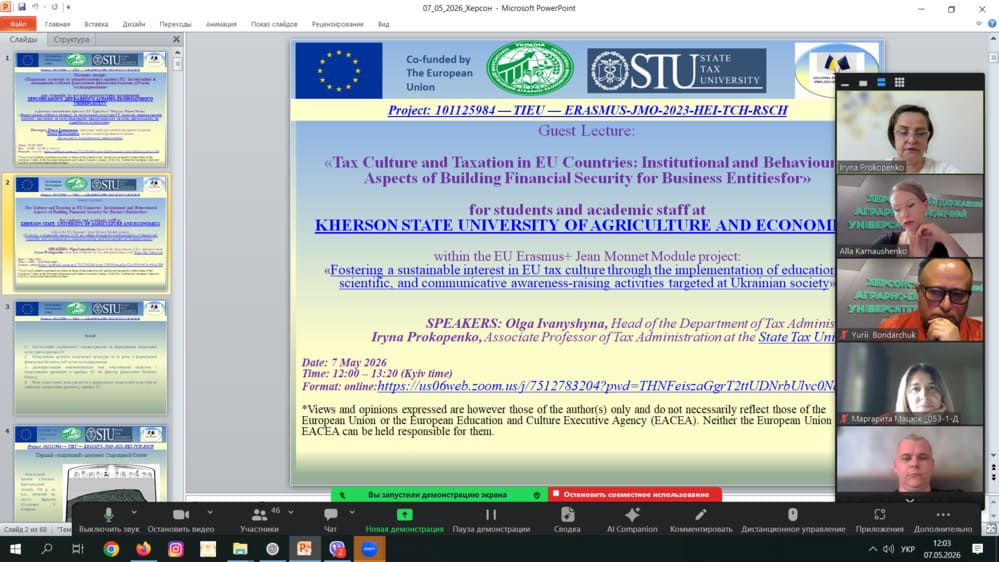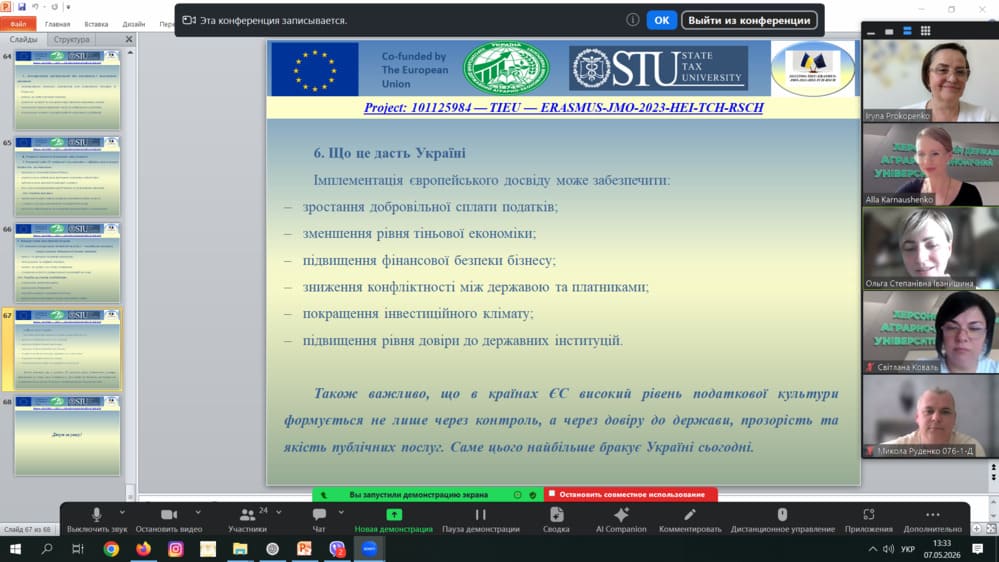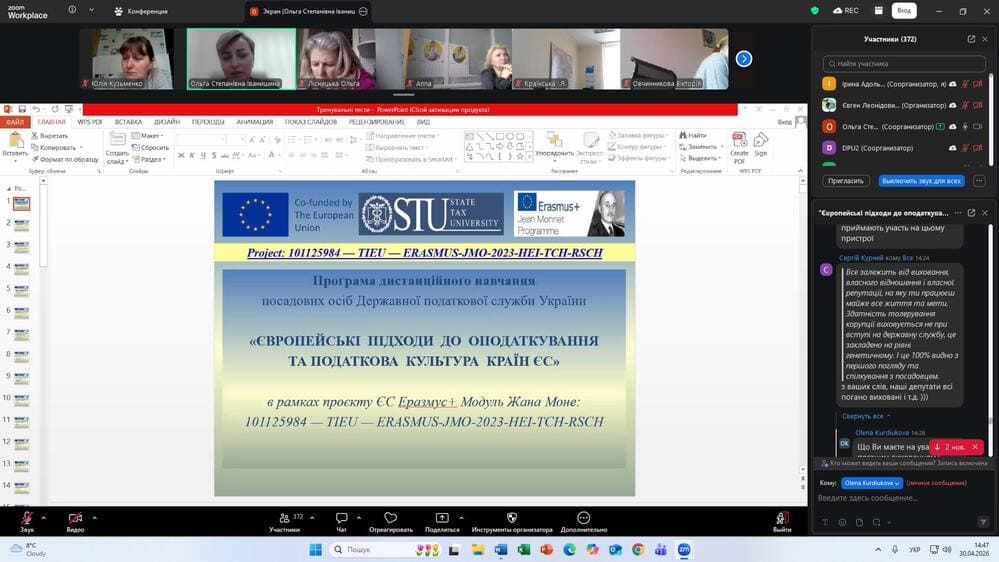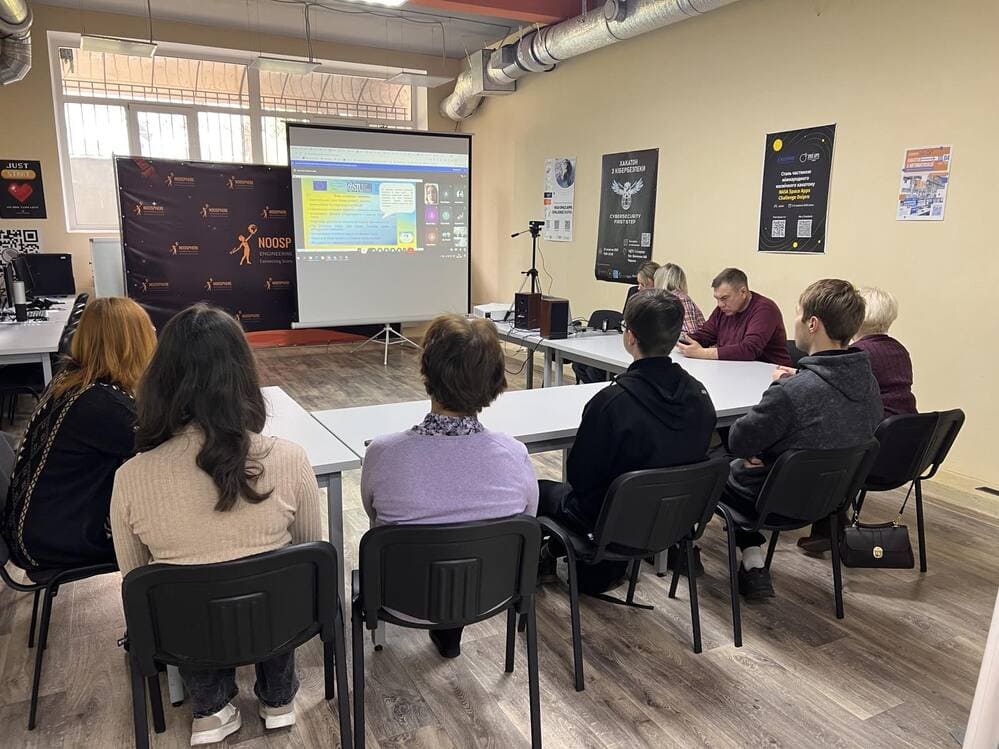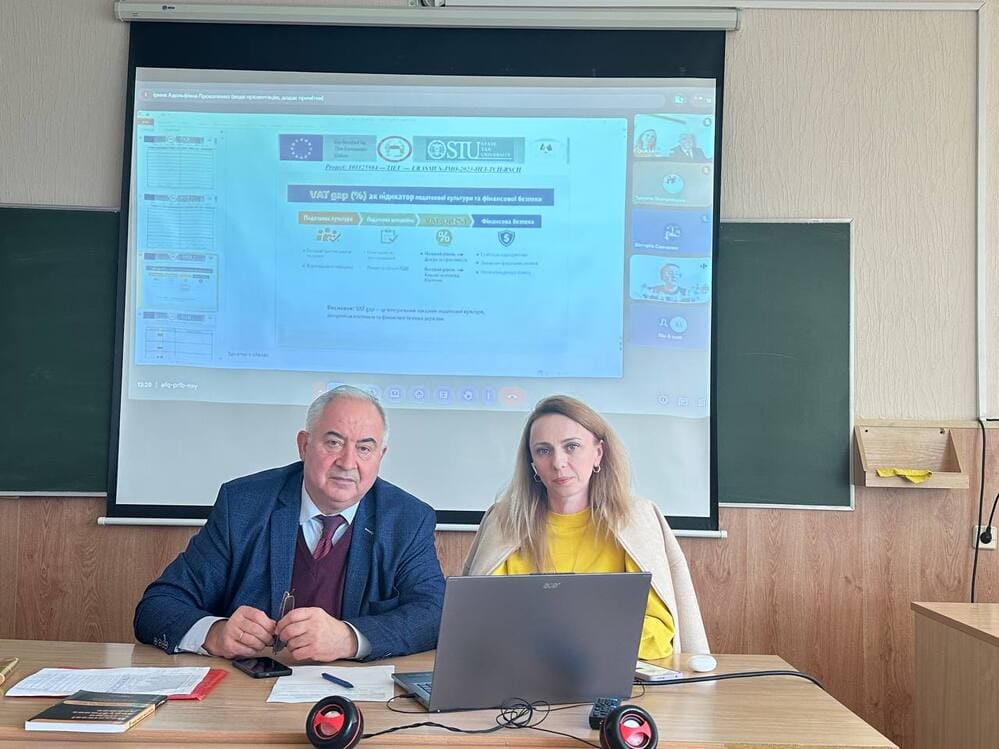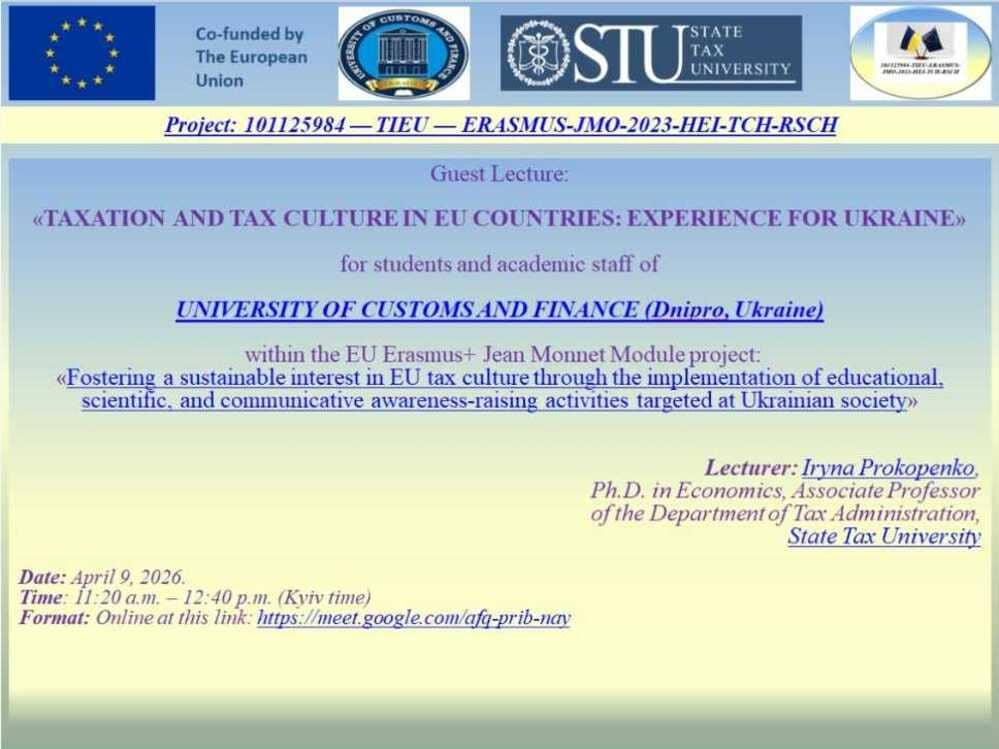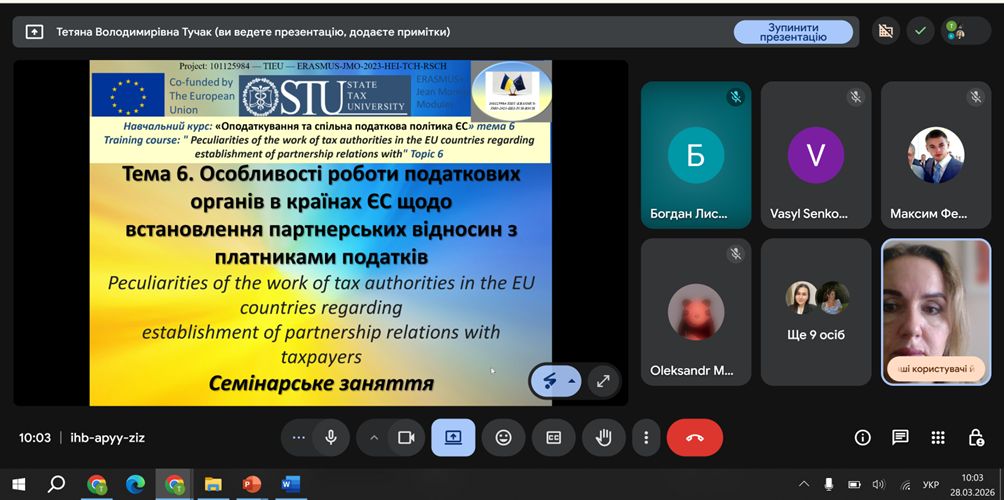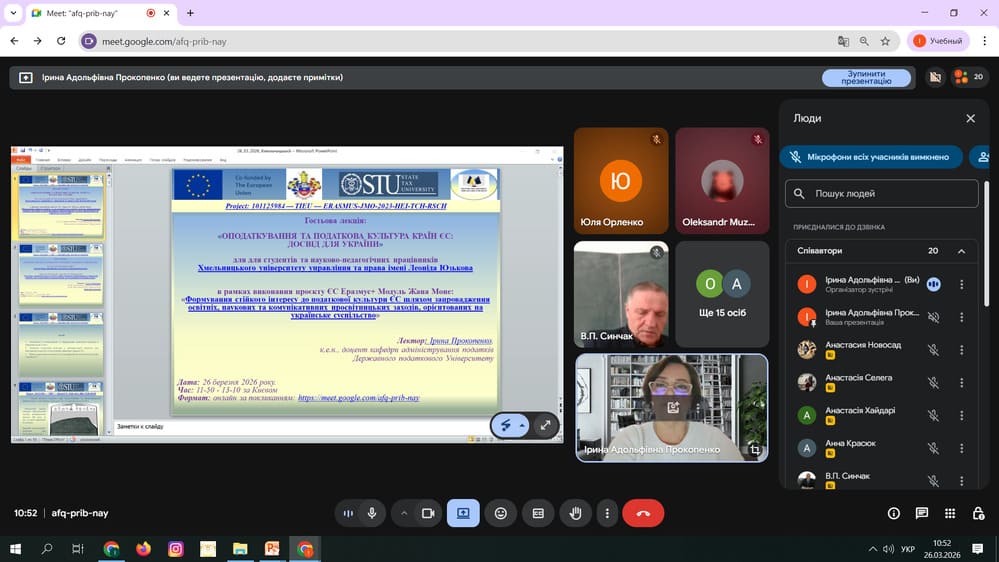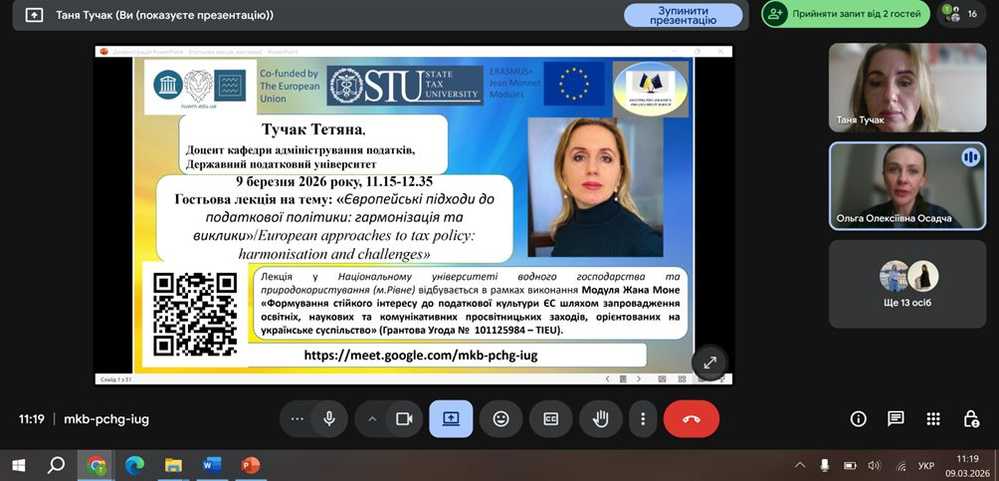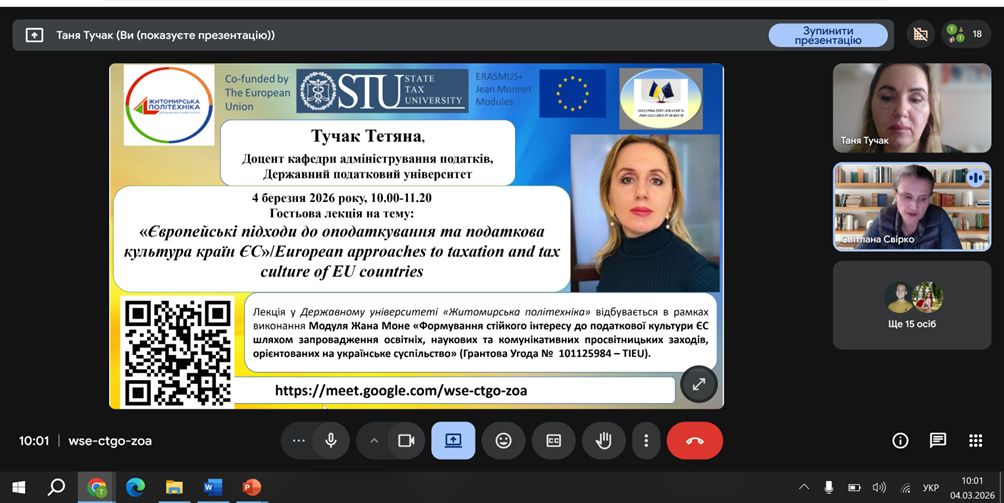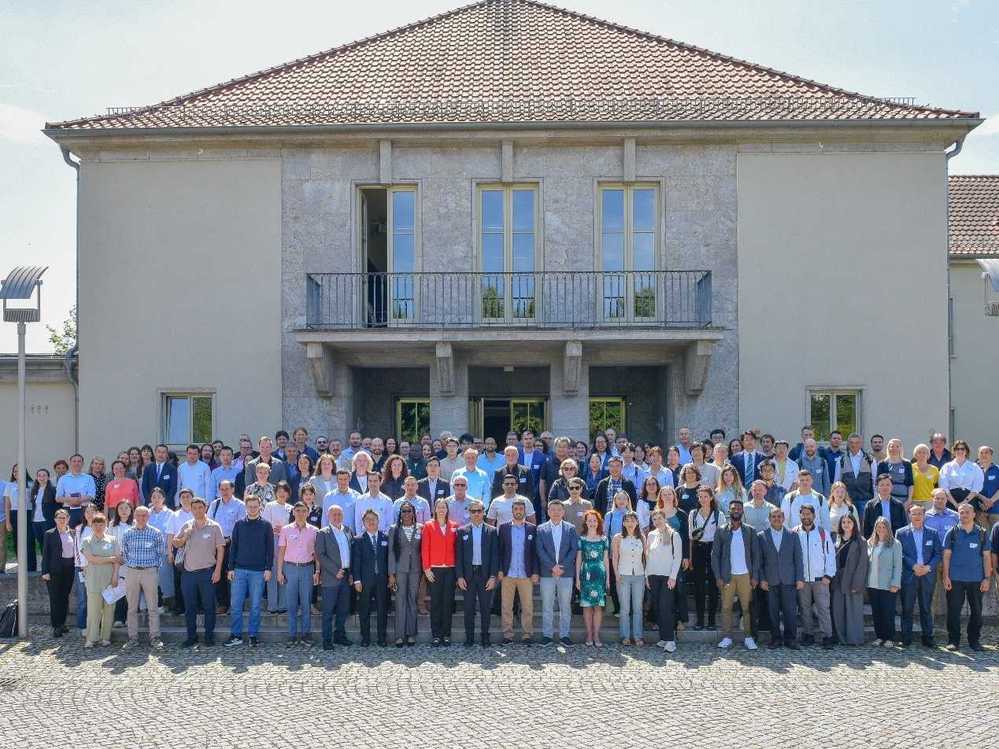
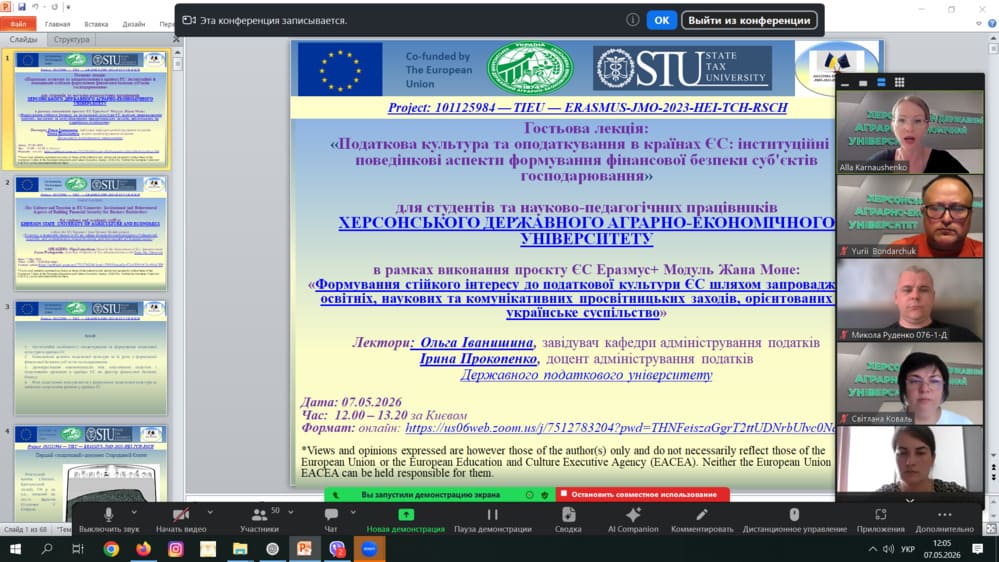
On 7 May 2026, a guest lecture was held on the topic ‘Tax culture and taxation in EU countries: institutional and behavioural aspects of building financial security of economic entities’ for higher education students and academic staff at Kherson State Agrarian and Economic University.
The event was also attended by students and lecturers from the S.Z. Gzhytskyi Lviv National University of Veterinary Medicine and Biotechnology.
The lecture was delivered as part of the European Union’s Erasmus+ Jean Monnet project ‘Jean Monnet Module: Fostering a sustainable interest in EU tax culture through educational, scientific and communication activities’ (No. 101125984 – TIEU – ERASMUS-JMO-2023-HEI-TCH-RSCH).
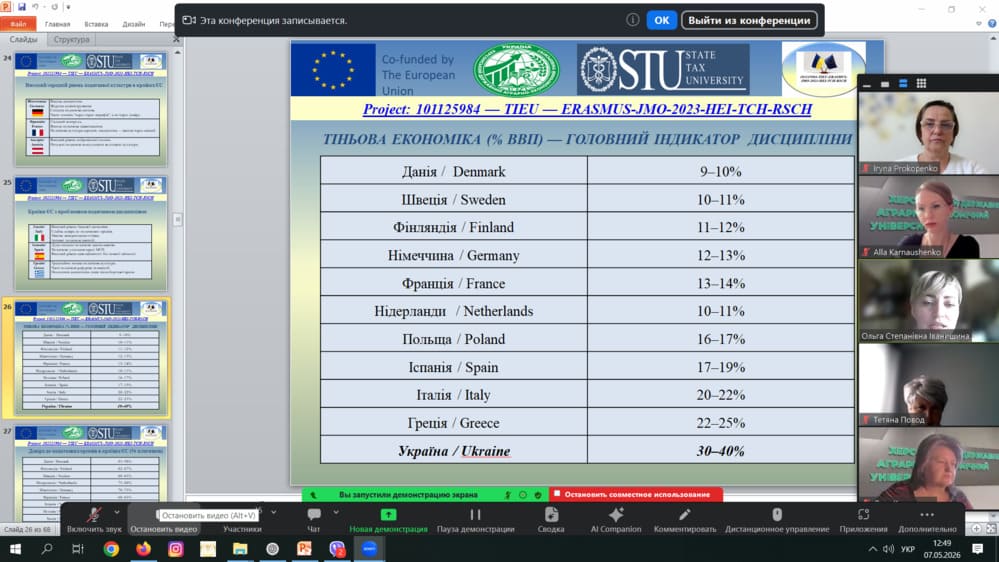
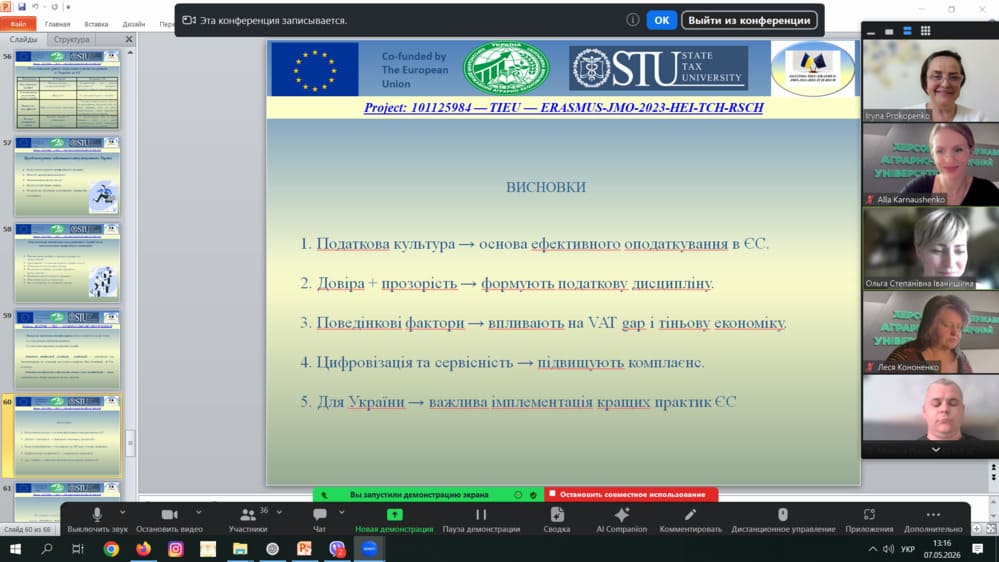
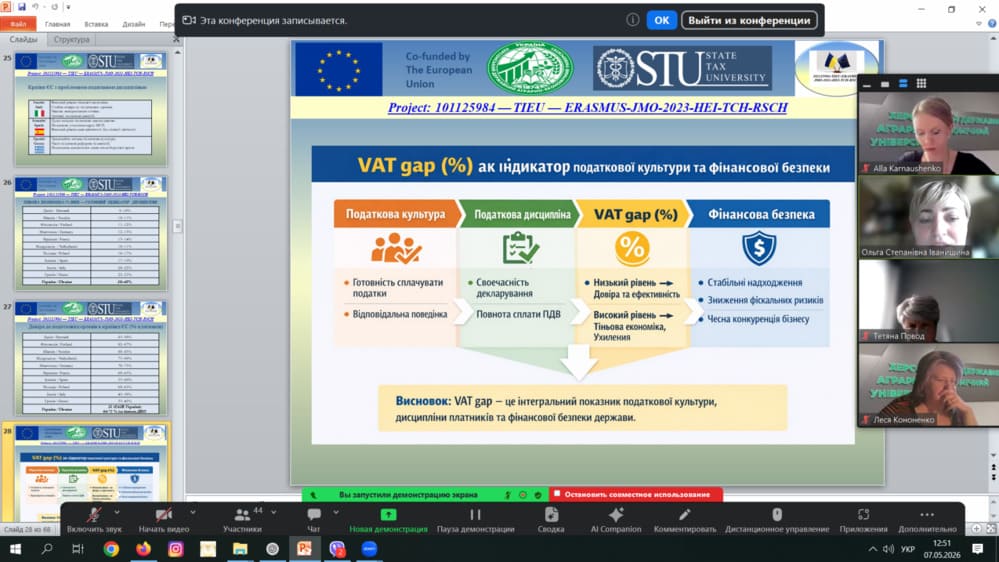
The lecture examined the institutional characteristics of tax systems in European Union countries and the mechanisms for fostering a tax culture. Particular attention was paid to the behavioural aspects of tax culture and their role in ensuring the financial security of businesses. Approaches to democratising relations between taxpayers and tax authorities were examined as a factor in enhancing trust and the stability of the business environment, as well as the importance of the institution of tax consultancy in reducing tax risks.
The event was accompanied by a professional discussion, during which participants discussed current issues regarding the development of tax culture, improving tax compliance on the part of both taxpayers and tax authorities, as well as the prospects for implementing best European practices in Ukraine.
We would like to express our sincere gratitude to Alla Serhiivna Karnaushenko, Head of the Department of Entrepreneurship, Accounting and Finance at the Faculty of Economics, for the invitation and for her assistance in organising the event.
Following the lecture, participants noted its high scientific and practical standard and relevance, as well as its significant contribution to improving tax literacy, developing tax culture and strengthening the financial security of business entities in Ukraine, taking into account European approaches.
For more information about the Project and its activities, please visit.
*With the financial support of the European Union. The views and opinions expressed in this publication are solely those of the author(s) and do not necessarily reflect the position of the European Union or the European Education and Culture Agency (EACEA). Neither the European Union nor EACEA can be held responsible for them.