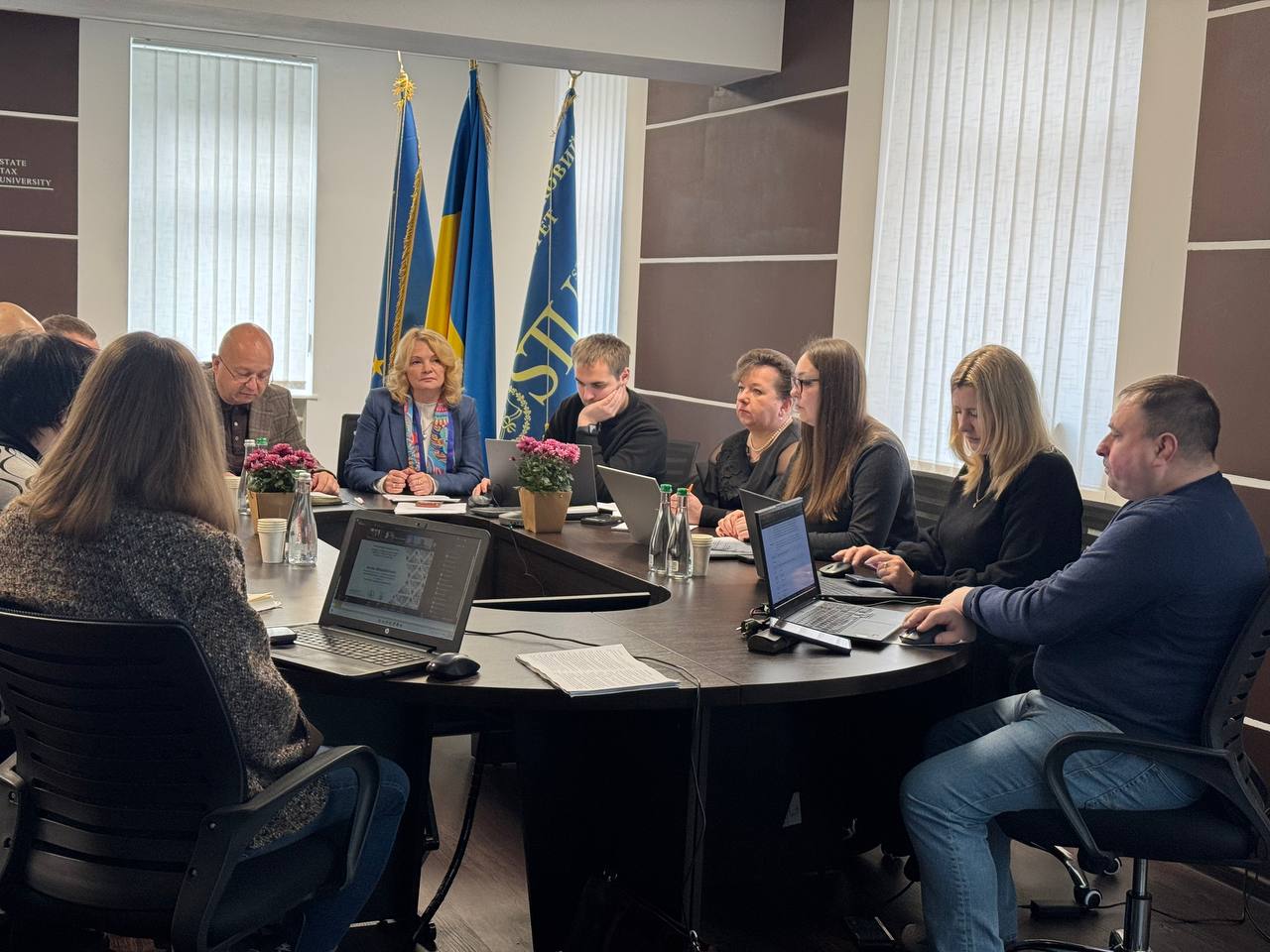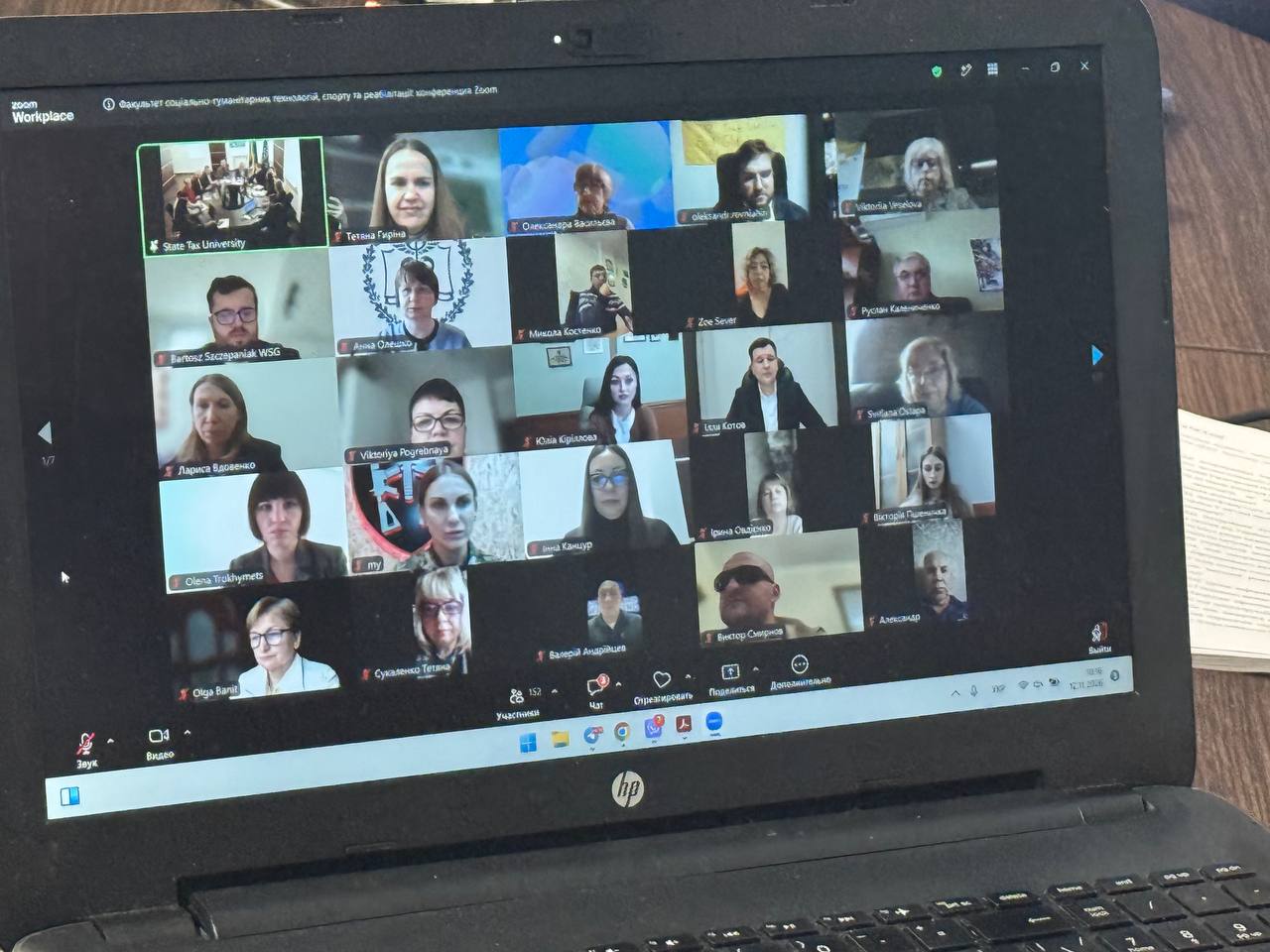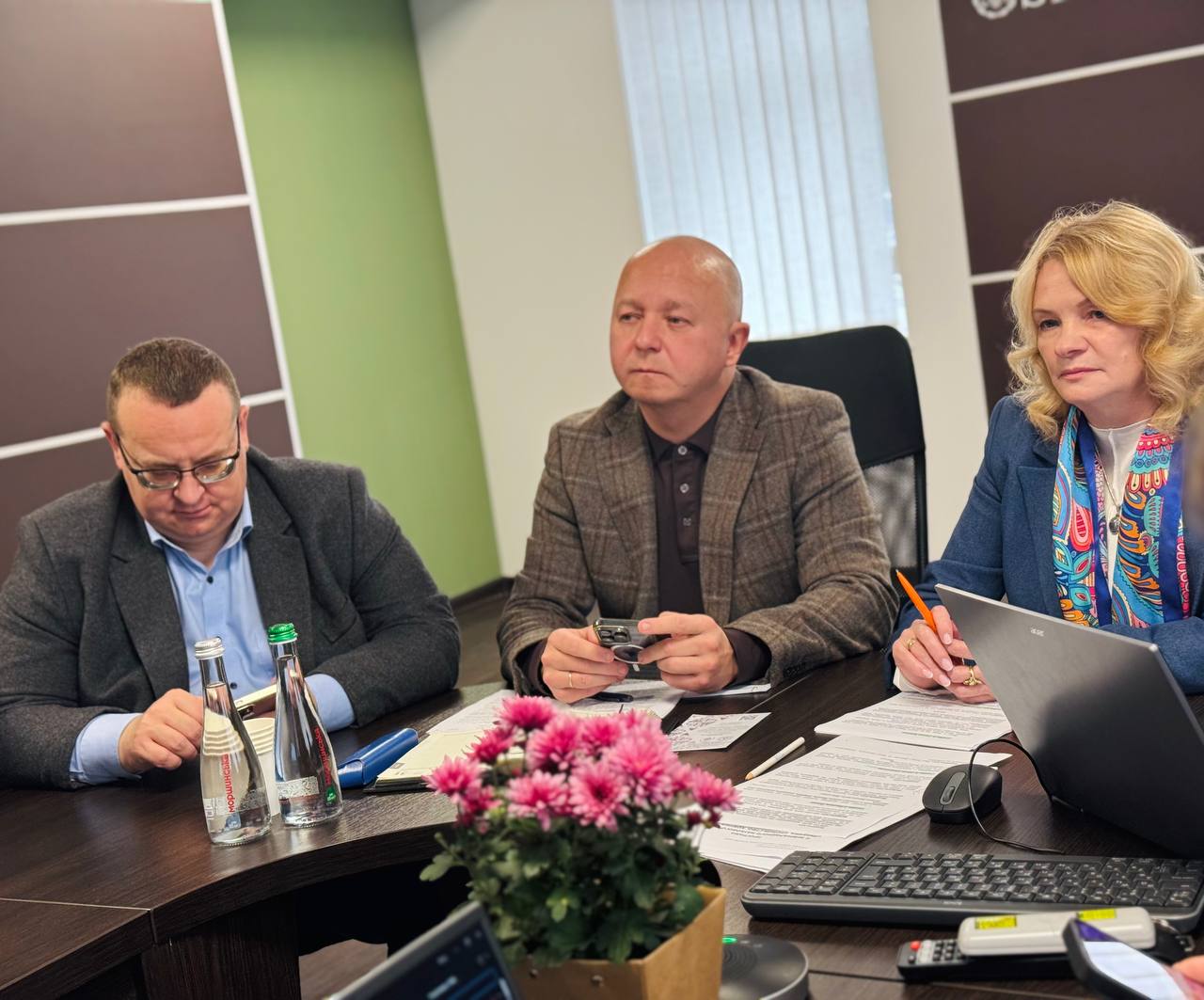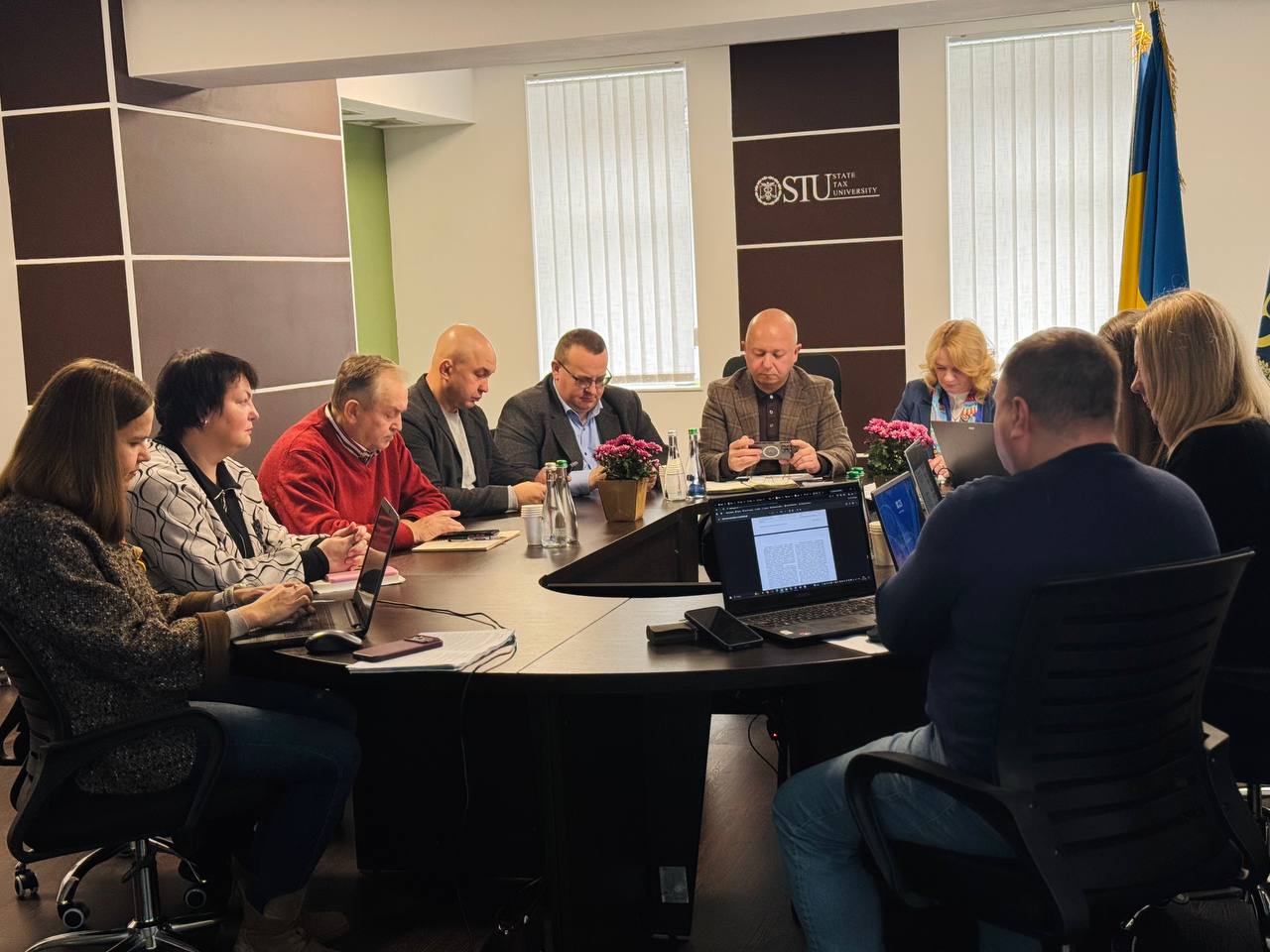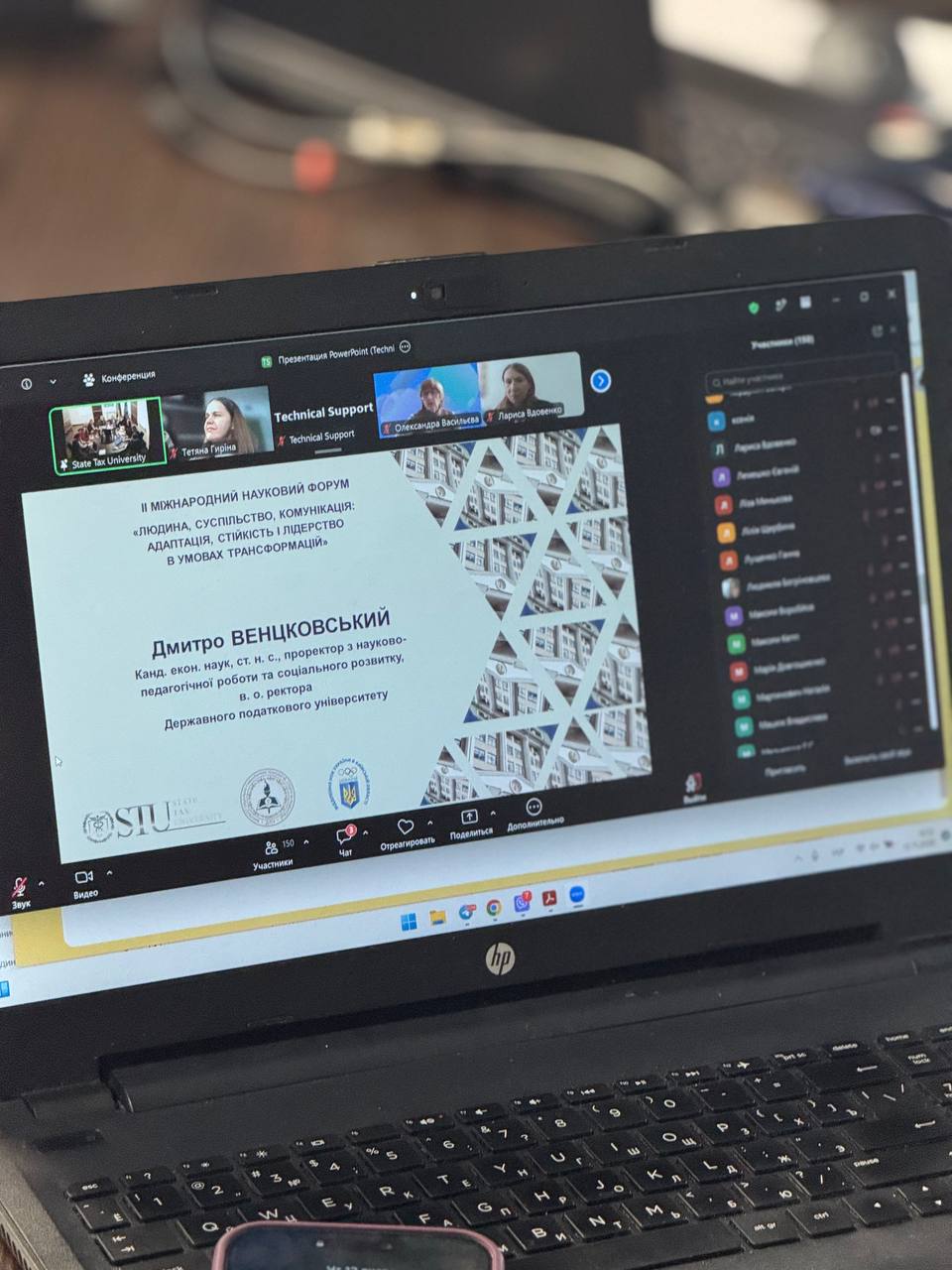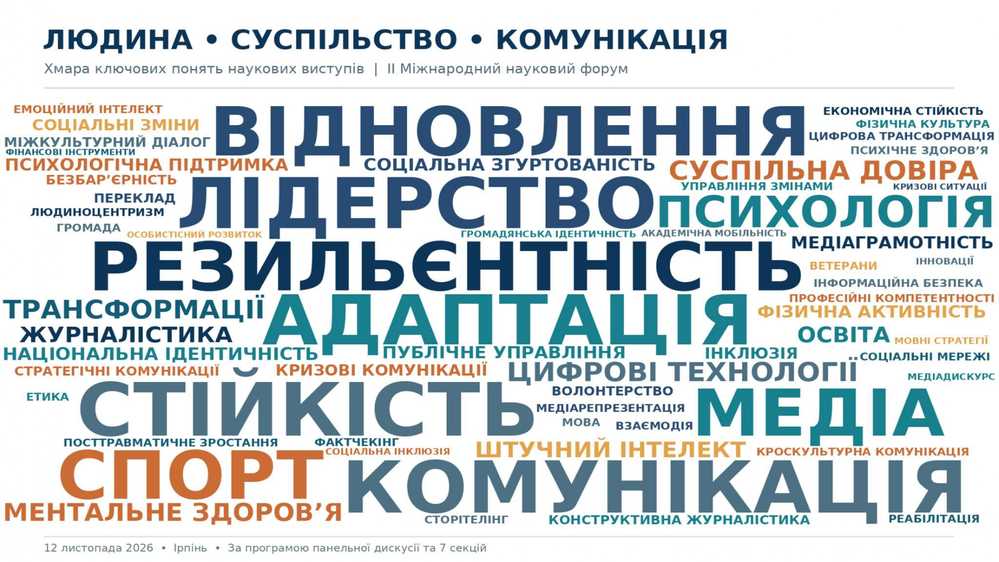
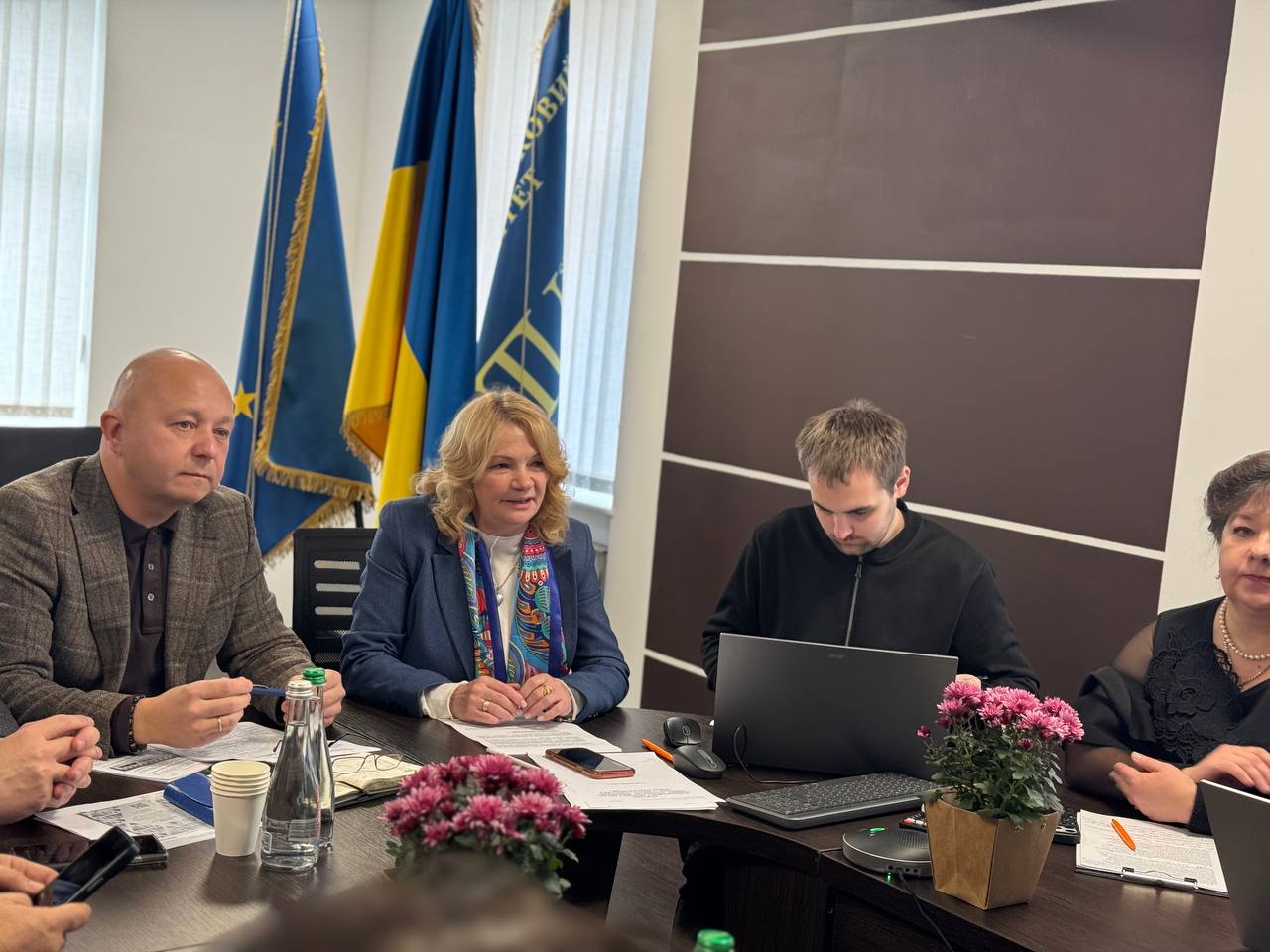
On 12 November, the Second International Scientific Forum, entitled “Human Being, Society, Communication: Adaptation, Resilience and Leadership in Times of Transformation,” was held at State Tax University. Nearly 200 participants discussed psychological support, trust in the media and public institutions, preserving the memory of the war, and engaging young people in Ukraine’s recovery.
The forum brought together representatives of 33 higher education institutions, including 27 Ukrainian and six international universities, as well as representatives of government institutions, civil society and international organisations. Among the participants were academics, diplomats, military personnel, journalists, psychologists, athletes and students.
The event was organised by the Faculty of Social and Humanitarian Technologies, Sport and Rehabilitation to mark the 105th anniversary of State Tax University and World Science Day for Peace and Development. The forum was moderated by Nataliia Zykun, Dean of the Faculty, and Dmytro Ventskovskyi, Vice-Rector for Academic Affairs and Social Development.
Vasyl Lutsyk, Vice-Rector for Research, emphasised the importance of research that responds to society’s needs and helps develop practical solutions. He highlighted interdisciplinary cooperation, international academic partnerships and the involvement of young researchers in collaborative projects.
The discussion featured Yuliia Kirillova, Deputy Minister for Veterans Affairs of Ukraine; Hanna Krysiuk, Adviser to the Ukrainian Parliament Commissioner for Human Rights and President of the Business Woman Club; Viktor Smyrnov, Hero of Ukraine and six-time Paralympic swimming champion; and Olena Pavlova, Lieutenant Colonel and Deputy Commander for Personnel Psychological Support of the 67th Separate Mechanised Brigade.
The international perspective was represented by Bartosz Szczepaniak, Director of the International Office at WSG University in Poland; David Netis, wrestling coach of the Israeli Olympic team; and Zoya Sever, artist, volunteer and founder of the United People of the Planet Foundation. Natsu Ishihara from Japan also joined the forum. During the Tokyo Olympic Games, she served as a volunteer assistant to the Ukrainian national team.
The central event of the forum was the panel discussion “Human Being, Community, State: New Dimensions of Resilience and Leadership in Times of War.”
Oleksandr Rovniagin, Secretary of the Embassy of Ukraine in the Republic of Korea, spoke about Ukraine’s international positioning. Svitlana Ostapa, Chair of the Supervisory Board of Suspilne Broadcasting, Deputy Editor-in-Chief of Detector Media and Associate Professor at State Tax University, examined the transformation of Ukraine’s media landscape during the full-scale war, journalistic standards and public trust.
Dmytro Ventskovskyi focused on the role of trust, responsible leadership and transparent management decisions in strengthening societal resilience. Illia Kotov, Associate Professor at State Tax University and Head of the Centre for the Development of State Strategy and Public Policy, spoke about communication in local governance and its importance for post-war recovery.
Olena Trokhymets, Professor at the Academy of Upper Silesia named after Wojciech Korfanty in Katowice, addressed the issue of maintaining mental health in the professional environment. Valerii Andriitsev, PhD in Physical Education and Sport, Honoured Master of Sport of Ukraine, Olympic silver medallist in freestyle wrestling, World and European champion, and military serviceman, spoke about the role of martial arts in the physical training and psychological resilience of Ukraine’s defenders.
Vasyl Derevinskyi, Head of the Department of Political Science and History at Kyiv National University of Construction and Architecture, dedicated his presentation to the digital memorialisation of the Russian-Ukrainian war. Olha Banit, Professor at the Department of Management of Kyiv National Economic University named after Vadym Hetman, presented perspectives on modern educational technologies.
Olena Nechai, Director of the Ukraine Global Scholars repatriation programme, explored economic mechanisms for engaging young people in Ukraine’s recovery through digital technologies and partnerships between education and business. John Connors, an Irish writer, historian and volunteer, delivered a presentation entitled “In What Way Can I Be of Help?”, focusing on practical ways to support Ukraine and the importance of international solidarity.
Participants also explored opportunities for cooperation in psychological support, physical rehabilitation, adaptive sports and work with veterans.
Other important topics included joint educational and research projects with international partners, cooperation between universities, businesses and local communities, and student participation in research and recovery initiatives.
A separate part of the programme was a scientific and methodological seminar entitled “Contemporary Perspectives on the Development of Physical Culture and Sport in Ukraine,” organised for master’s students.
The proposals and recommendations put forward by the participants will be summarised in the forum’s resolution and published in the proceedings.